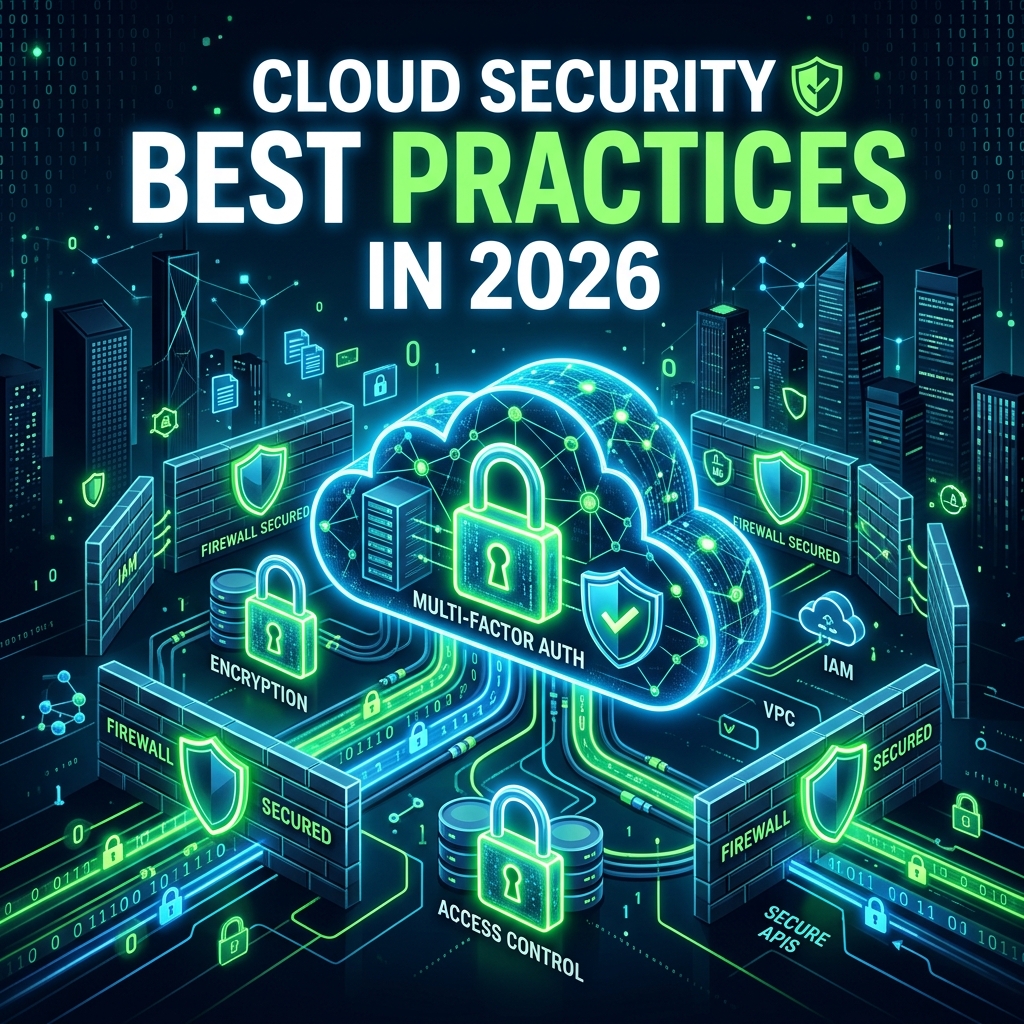
Zero Trust is no longer a buzzword — it's the foundational security philosophy adopted by the world's most resilient organizations. With the perimeter effectively dissolved by remote work, cloud migration, and sophisticated threat actors, the old "castle-and-moat" model is dead.
In this comprehensive guide, we'll walk you through everything you need to know to implement a production-grade Zero Trust Architecture (ZTA) in 2026 — from core principles to hands-on configurations.
What Is Zero Trust?
Zero Trust is a security framework that eliminates implicit trust from your network architecture. Instead of assuming that everything behind the corporate firewall is safe, Zero Trust requires continuous verification of every user, device, and application — regardless of location.
"Never trust, always verify. Every access request must be fully authenticated, authorized, and encrypted before granting access." — NIST SP 800-207
The Three Core Principles
- Verify Explicitly — Authenticate and authorize based on all available data points: user identity, location, device health, service/workload, data classification, and anomalies.
- Use Least Privilege Access — Limit user access with just-in-time and just-enough-access (JIT/JEA), risk-based adaptive policies, and data protection.
- Assume Breach — Minimize blast radius and segment access. Verify end-to-end encryption, use analytics for visibility, and drive threat detection and improve defenses.
Why Zero Trust Is Critical in 2026
The threat landscape has shifted dramatically. Here's why organizations are racing to adopt ZTA:
- Remote/Hybrid Work — 73% of the workforce now operates outside the traditional perimeter at least part-time.
- Cloud-First Architecture — Multi-cloud and SaaS adoption has fragmented the attack surface beyond recognition.
- AI-Powered Attacks — Threat actors are leveraging generative AI to craft hyper-realistic phishing campaigns and polymorphic malware at scale.
- Regulatory Compliance — Frameworks like DPDPA (India), GDPR, and the updated NIST CSF 2.0 explicitly recommend Zero Trust principles.
The Five Pillars of Zero Trust
A mature Zero Trust implementation addresses five interconnected pillars:
1. Identity
Identity is the new perimeter. Implement strong multi-factor authentication (MFA), passwordless authentication, and continuous identity verification. Solutions like Azure AD Conditional Access and Okta Adaptive MFA dynamically assess risk at every login.
2. Devices
Every device accessing your resources must meet compliance standards. Deploy endpoint detection and response (EDR), enforce device health attestation, and implement Mobile Device Management (MDM) policies.
3. Network
Move beyond flat networks. Implement micro-segmentation to create granular security zones, use Software-Defined Perimeters (SDP), and encrypt all traffic — even east-west traffic within your data center.
# Example: Micro-segmentation policy (Palo Alto Prisma)
security-rule:
  name: "isolate-finance-db"
  source-zone: ["finance-app-tier"]
  destination-zone: ["finance-db-tier"]
  application: ["postgresql"]
  action: allow
  profile:
    vulnerability: "strict"
    anti-spyware: "strict"
  logging: true
4. Applications & Workloads
Secure applications with runtime application self-protection (RASP), container security scanning, and API gateway authentication. Every microservice should authenticate with mTLS certificates.
5. Data
Classify, label, and encrypt data at rest and in transit. Implement Data Loss Prevention (DLP) policies and use rights management to control who can access, copy, or share sensitive information.
Step-by-Step Implementation
Here's a pragmatic roadmap for rolling out Zero Trust in your organization:
- Audit & Inventory — Map all users, devices, applications, and data flows. You can't protect what you can't see.
- Define Protect Surface — Identify your most critical DAAS (Data, Applications, Assets, Services) elements.
- Map Transaction Flows — Understand how traffic moves across your protect surface to design granular policies.
- Build Zero Trust Policies — Create "who, what, when, where, why, and how" rules using the Kipling Method.
- Monitor & Maintain — Deploy SIEM/SOAR integration, implement continuous monitoring, and iterate based on analytics.
Common Mistakes to Avoid
- Trying to do everything at once — Start small with a single protect surface and expand.
- Ignoring user experience — Security friction drives shadow IT. Make secure access seamless.
- Treating it as a product — Zero Trust is a strategy, not a product you can buy from a single vendor.
- Neglecting legacy systems — Wrap legacy applications with identity-aware proxies instead of leaving them exposed.
Conclusion
Zero Trust isn't optional in 2026 — it's the standard. Whether you're a startup or an enterprise, the principles remain the same: verify explicitly, use least privilege, and assume breach.
At Netrinix Academy, our cybersecurity training programs include hands-on Zero Trust implementation labs where you build real architectures from scratch. Ready to level up your security game?